360 Degree Feedback: A Complete View of Workplace Strengths and Development Areas
Workplace feedback is most useful when it gives people a clear and balanced understanding of how they are performing. A single manager’s opinion can be helpful, but it may not always capture the full picture. People interact with colleagues, team members, senior leaders and clients in different ways, so wider feedback can provide more meaningful insight.
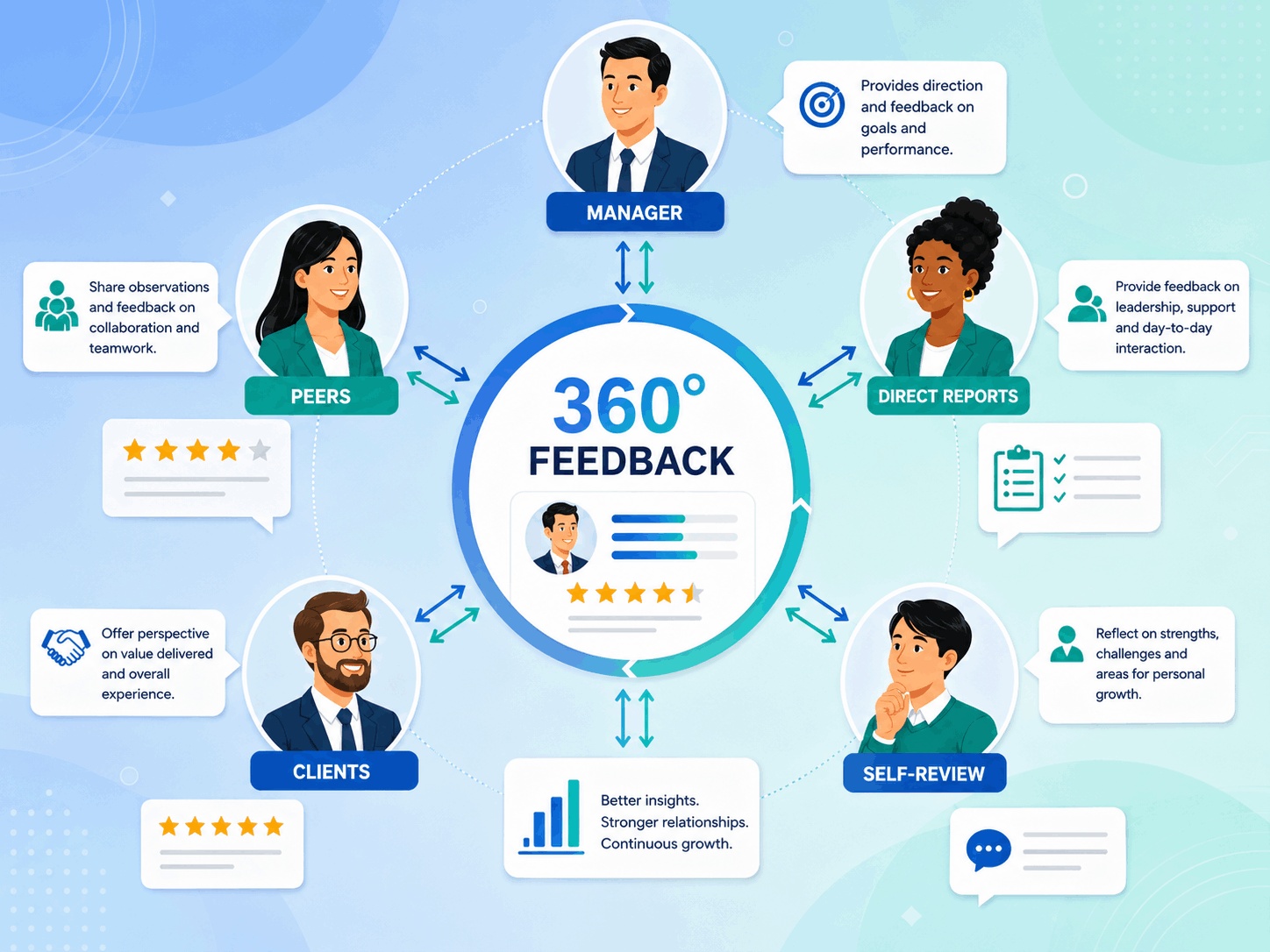
360 degree feedback is a method of collecting performance and behaviour feedback from multiple sources rather than relying on one viewpoint. It may include comments from line managers, peers, direct reports, project teams and sometimes external stakeholders. This creates a fuller picture of how someone communicates, collaborates, leads, supports others and contributes to the wider organisation.
One of the main advantages of this approach is that it helps identify patterns. If several people highlight the same strength, it is likely to be a reliable area of positive performance. If different groups raise similar concerns, it may point to a development need that should be addressed. This makes the feedback more useful than isolated comments.
The process can be particularly valuable for people in leadership or management roles, but it can also support wider employee development. It can help individuals understand how they are perceived across the organisation and whether their behaviour matches their intentions. This is important because people may not always realise how their working style affects others.
Good feedback should focus on behaviours that can be observed and improved. Questions might explore communication, reliability, listening skills, decision-making, teamwork, problem-solving, leadership, accountability and support for colleagues. Specific behaviour-based feedback is easier to understand than general opinions and gives the individual something practical to work on.
Confidentiality is an important part of the process. Respondents are more likely to give honest and useful feedback when they know their comments will be handled appropriately. If people fear their responses will be personally identified, they may avoid giving meaningful input. A clear and confidential process helps build trust and improve the quality of feedback.
The feedback should be balanced rather than purely critical. Everyone has strengths as well as areas for development. A well-structured report should show what the individual does well, where they add value and where improvement would be beneficial. This helps make the process constructive rather than discouraging.
Receiving feedback from several sources can sometimes feel uncomfortable. Some comments may be expected, while others may be surprising. It is important for individuals to look for themes rather than focusing too heavily on one remark. Support from a coach, manager or HR professional can help turn the results into useful reflection and action.
Action planning is where the process becomes valuable. Feedback alone does not improve performance unless it leads to change. After reviewing the results, the individual should choose a small number of priorities. These may include improving communication, giving clearer updates, listening more actively, managing conflict better or supporting colleagues more consistently.
The development plan should be realistic and measurable. Instead of vague goals such as “be a better communicator,” a person might commit to holding regular one-to-one meetings, summarising actions after meetings or asking colleagues for clarification before making decisions. Practical actions are easier to track and more likely to create improvement.
Organisations can also use feedback results to identify wider training needs. If several managers receive similar feedback about delegation, communication or team support, this may suggest a need for leadership development. If employees across teams report similar challenges, the organisation can address them through training, coaching or changes in working practices.
However, the process must be introduced carefully. People should understand why feedback is being collected, who will provide it, how it will be used and what support will be available afterwards. If the purpose is unclear, participants may feel anxious or suspicious. Clear communication helps create a more positive experience.
It is also important that feedback is not used as a popularity contest. The purpose is not to reward the most liked person or criticise someone unfairly. The value lies in identifying useful patterns that support development. Questions, respondent selection and reporting should all be designed to keep the process fair and focused.
Timing can also influence results. Feedback may be especially useful during leadership programmes, annual development reviews, promotion planning or after someone has been in a new role long enough for others to observe their work. It should not be rushed or used only when problems arise.
In summary, 360 degree feedback provides a wider and more balanced view of workplace performance, behaviour and development needs. By gathering input from managers, colleagues, direct reports and other relevant people, it can reveal strengths, blind spots and practical opportunities for growth. When handled confidentially and followed by clear action planning, it can support better self-awareness and stronger workplace performance.