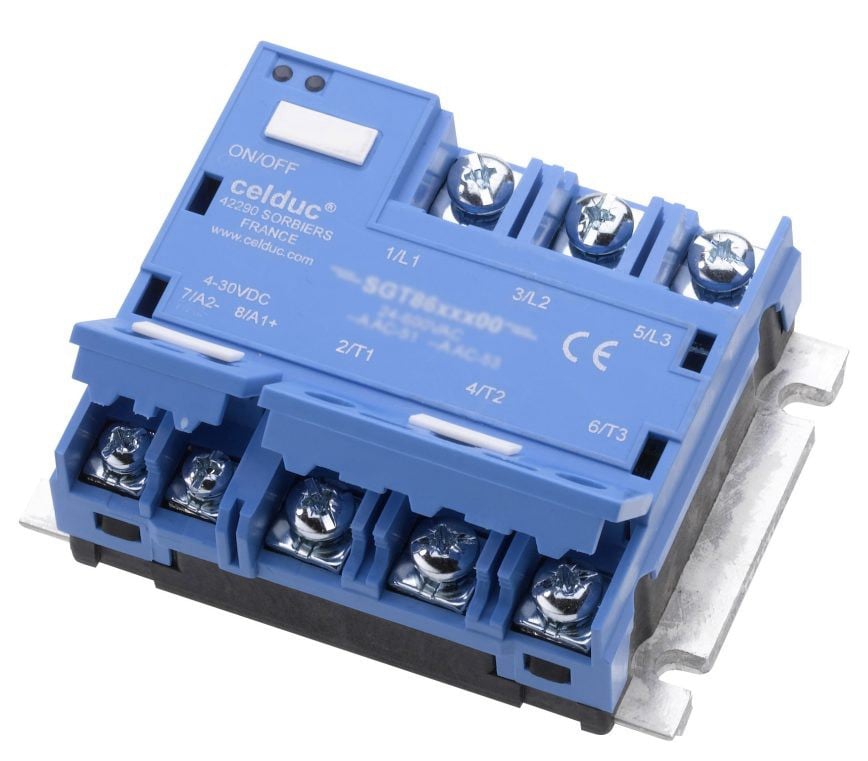
Solid State Relays: Choosing Electronic Switching for Demanding Electrical Applications
Modern electrical equipment increasingly depends on electronic control systems capable of operating quickly, accurately and reliably. Whether controlling heating equipment, industrial machinery, lighting or transportation systems, designers often need a method of allowing a relatively small control signal to switch a much larger electrical load. The choice of switching technology can significantly influence system reliability, maintenance requirements and operating performance.
Solid State Relays provide this switching function electronically, using semiconductor components rather than the moving contacts found inside traditional electromechanical relays. This fundamental difference makes them particularly useful where switching occurs frequently, mechanical wear needs to be minimised or silent operation is desirable. However, selecting the correct device requires careful consideration of the load, voltage, current and operating environment.
The Basic Purpose of a Relay
A relay allows one electrical circuit to control another.
For example, an electronic controller operating at relatively low voltage may need to switch a much larger heater or other electrical load.
Connecting that load directly through the controller may be inappropriate because the controller cannot safely handle the required voltage or current.
A relay provides an interface between the control system and the load.
Moving Away from Mechanical Contacts
Traditional electromechanical relays use an energised coil to physically move contacts.
This approach has been used successfully for decades and remains appropriate for many applications.
Electronic relays perform the same basic switching role differently.
Instead of moving physical contacts, semiconductor components control whether current can flow through the output circuit.
This removes the mechanical switching action from the device.
Benefits in High-Cycle Applications
Mechanical components inevitably experience wear.
When a relay operates occasionally, this may have little practical significance.
In automated equipment, however, a relay might operate thousands of times every day.
Applications involving rapid or repeated switching can therefore benefit from technology that does not depend on mechanically moving contacts.
This is one reason electronic switching is frequently associated with automated process control.
Heating and Temperature Regulation
Temperature control provides a good example of frequent switching.
An industrial heating system may continually monitor temperature and switch heating elements on and off to maintain a target value.
The closer the required temperature control, the more frequently switching may occur.
Electronic relays can accommodate rapid cycling without creating the mechanical contact wear associated with repeatedly operating a conventional relay.
Industrial Process Control
Manufacturing systems often contain numerous electrically controlled devices.
Heaters, solenoids, valves and other equipment may need to operate automatically as part of a production process.
Control commands can originate from programmable logic controllers, temperature controllers or other electronic systems.
A suitable relay provides the switching interface between these control devices and the equipment being operated.
Rail and Transportation Systems
Transportation equipment can place unusual demands on electrical components.
Equipment installed on rail vehicles may experience vibration, shock, temperature variation and extended service periods.
Reducing the number of mechanically moving components can be advantageous in certain switching applications.
However, electronic relays still need to be appropriately designed and specified for the electrical and environmental requirements of the installation.
Silent Switching
One easily noticeable difference between mechanical and electronic relays is sound.
An electromechanical relay typically produces a click when its contacts operate.
An electronic device can perform its switching function without this mechanical noise.
While sound is irrelevant in many factories, quieter switching may be useful in passenger environments, laboratories and other noise-sensitive installations.
Selecting the Correct Output Type
One of the most important specification decisions is whether the relay will switch AC or DC.
The internal semiconductor arrangement required for alternating current can differ from that required for direct current.
An SSR designed specifically for AC switching should therefore not automatically be assumed suitable for a DC load.
The output type should always match the electrical supply being controlled.
Input Control Requirements
The input side also needs careful consideration.
Control signals may be provided at different voltage levels depending on the equipment generating them.
A PLC output, electronic controller or other control device needs to be compatible with the relay's specified input range.
The control system must also be capable of supplying the necessary input current.
Understanding Zero-Cross Operation
Some AC electronic relays use zero-cross switching.
Alternating-current voltage continuously changes direction and passes through zero during every cycle.
A zero-cross device waits until the waveform is close to this point before beginning conduction.
For appropriate resistive loads, this can reduce switching disturbances compared with turning the load on at another point in the waveform.
When Immediate Switching Is Needed
Zero-cross operation is not ideal for every application.
Some control systems require the output to respond immediately when the input command changes.
Random-turn-on or instantaneous devices can provide this behaviour.
Selecting the correct switching method requires understanding both the load and the control strategy.
Heat Is a Critical Design Consideration
Electronic switching creates heat.
When current passes through the semiconductor output, a small voltage remains across the device.
The combination of current and voltage drop produces power loss, which is converted into heat.
At relatively low currents this may be manageable, but higher-current applications can generate significant thermal loads.
Using Heat Sinks
Heat sinks provide a larger surface area through which thermal energy can dissipate.
Many higher-current SSR installations therefore require an appropriately sized heat sink.
Correct mounting is important because poor thermal contact between the relay and heat sink can significantly reduce cooling effectiveness.
Some applications may also require forced ventilation or additional enclosure cooling.
Ambient Temperature
The surrounding air temperature directly affects thermal performance.
A relay operating inside a warm electrical cabinet has less ability to dissipate heat than the same device operating in cooler surroundings.
This is why manufacturers commonly provide derating information.
The allowable continuous current may decrease as ambient temperature rises.
Allowing an Engineering Margin
Selecting a relay whose nominal rating exactly matches the expected load may not always provide an appropriate engineering margin.
Startup currents, enclosure temperature and operating conditions should all be considered.
The correct margin depends on the application and manufacturer specifications rather than simply applying an arbitrary oversizing factor.
Inrush Current
Some electrical equipment draws considerably more current when first switched on than during normal operation.
Motors, transformers, incandescent lamps and capacitive equipment are common examples.
A load that normally draws a modest current may briefly place a much greater demand on the switching device.
This behaviour needs to be considered when selecting the relay.
Off-State Leakage
Electronic switching devices do not necessarily behave like completely separated mechanical contacts when turned off.
A small amount of current may remain through the output circuit.
This is commonly described as leakage current.
For most appropriately designed systems it can be accommodated, but it may become significant when controlling sensitive or very low-power equipment.
Electrical Protection
Semiconductor devices can react quickly to excessive current and electrical transients.
Appropriate circuit protection is therefore an important part of the installation.
Depending on the application, this may involve suitable fuses, surge suppression or other protective components.
Protection should be selected according to both the switching device and the connected load.
Understanding Failure Behaviour
Every electrical component has potential failure modes.
Electronic relays can sometimes fail differently from mechanical ones.
For example, certain semiconductor failures may leave the output conducting even though the control signal has been removed.
System designers should therefore consider what the wider equipment will do if the switching device fails.
This becomes particularly important where uncontrolled operation could create a hazardous condition.
Isolation and Safety
Many electronic relays provide isolation between their control input and power output.
Optical coupling is commonly used to transfer the switching command while maintaining electrical separation.
However, isolation specifications vary between devices.
Designers must ensure that creepage, clearance, insulation and voltage ratings satisfy the requirements of the complete electrical system.
Installation and Wiring
Good component selection can be undermined by poor installation.
Electrical connections need to be correctly tightened and appropriately sized for the load current.
Loose terminals can create resistance and additional heating.
Control and power wiring should also be routed according to appropriate electrical design practices.
Enclosure Design
Electrical cabinet design can have a major effect on relay reliability.
Multiple heat-producing devices installed close together can significantly raise internal temperature.
Designers should therefore consider component spacing, ventilation and overall thermal loading.
In some installations, simply increasing the relay rating will not solve a thermal problem if the generated heat cannot escape from the enclosure.
Maintenance Requirements
Electronic relays do not have conventional contacts that require inspection for mechanical wear.
This can reduce certain maintenance concerns.
However, the surrounding installation should still be inspected periodically.
Electrical connections, heat sinks, ventilation openings and wiring can all deteriorate or become contaminated over time.
Comparing Switching Technologies
There is no universal rule that electronic switching is always preferable to mechanical switching.
Mechanical relays offer advantages including physical contact separation and extremely low leakage when open.
Electronic alternatives provide benefits such as silent operation, high switching frequency and the absence of mechanical contact wear.
The correct choice depends on the specific application.
Looking at the Complete System
Relay selection should never be based on current rating alone.
Engineers need to consider control voltage, output voltage, AC or DC operation, load characteristics, switching frequency, environmental temperature and cooling.
Expected lifecycle and maintenance requirements are also relevant.
Considering these factors together produces a much more reliable design than simply selecting a component based on one headline specification.
Ultimately, Solid State Relays offer a practical method of controlling electrical loads electronically in applications where frequent switching, quiet operation and resistance to mechanical wear are valuable. Their successful use depends on understanding semiconductor switching behaviour, particularly heat generation, leakage current, inrush loads and potential failure modes. Correct specification and thermal design can help deliver dependable switching throughout demanding industrial and transportation applications.